
When you see what happened to them in the 1990s, the harsh years some spent as prisoners in previous decades seem merely a dry-run.

Zviad Gamsakhurdia (1939-1993) became Georgia’s first freely-elected President after the Soviet Union collapsed, with a mandate to ‘renew’ the Georgian nation. His nationalist rhetoric moved so far and so fast, that part of the nation was left behind. Armed battles broke out down Tbilisi’s main street in 1992, which Gamsakhurdia weathered in the basement of the Presidential Palace.
The following year he fled to Chechnya and was later found dead – some say the victim of murder and others, of suicide. The sight of his stockinged feet at the burial in 1994 was the last humiliating picture television viewers had of a man, who was one of Georgia’s literary elite and a monitor of the Helsinki Accords.
*
After 1990, Vyacheslav Chornovil became one of Ukraine’s most influential public figures, leading a Ukrainian national party (RUKH) with a power base in the west of the country. Twice he ran for President.

(1937-1999)
A Western orientation was an article of faith for him. By the end of the decade it led him into troubled waters, when his was the only voice in the Ukrainian parliament to defend the NATO bombing of former Yugoslavia. Months before the Ukrainian Presidential elections in 1999 RUKH’s executive committee held a secret meeting and voted him out of the leadership. Weeks later, Chornovil was killed near Kirovohrad in unclear circumstances, when a lorry slewed across the path of his car.
In the Soviet era, Vyacheslav Chornovil had been a journalist and exponent of the Ukrainian language and literature at a time when it was rapidly becoming folkloric under the pressure of Soviet Russification. He was one of the first people to monitor the Helsinki Accords from Kyiv and spent 17 years as a prisoner on a succession of charges for the reports that he wrote.
*
One of Chornovil’s fellow-prisoners in the Urals labour camp known as Perm 35 was Sergey Kovalyov, the Moscow biologist [1930-2021, tr.]. He was well-known in local human rights circles for his reporting of political repression in Soviet Lithuania. He served ten years for what he wrote, but it was the 1990s that propelled him to international prominence.

Elected a deputy in Russia’s first parliament, he was later appointed the Russian Federation’s first Presidential Commissioner for Human Rights. Events quickly set him at loggerheads with President Yeltsin, after December 1994 when the federal forces invaded Chechnya. In an effort to stop indiscriminate violence against Chechen civilians, he and a handful of other deputies gave themselves as hostages, sitting under Russian fire with local inhabitants in Grozny’s basements.
Within months of the end of this futile war (in summer 1996), a chorus of voices in Russian public life could be heard agreeing with the position Kovalyov had taken. When it would have counted they were silent, and the whole weight of the Russian Government’s propaganda machine was calibrated, steadied, and unleashed upon a single man. Kovalyov did not buckle beneath the pressure and emerged with national, and international authority.
*
The Soviet-era law used to convict these three men (“anti-Soviet agitation and propaganda“, Article 70) and the law against “circulating anti-Soviet slander” (Article 190-1), were catch-alls: they were designed to nip in the bud any behaviour the authorities wanted to discourage – from the couple reading The Readers’ Digest, to the woman teaching yoga, and the students discussing ecumenical religion.
Not surprisingly, these laws netted some remarkable people like Chornovil, Kovalyov and Gamsakhurdia, men and women who posed a genuine challenge to the existing political order, whether they knew it or not. In the 1990s some were catapulted into positions where they mounted such a challenge and carried with them people who thought the same way.
♦
One of the most striking letters I ever read from a prisoner was written by the Ukrainian psychiatrist, Simeon Gluzman (b. 1946). He had only now begun to understand, he said, the words on Dr Martin Luther King’s tombstone:
Free at last; free at last
Thank God Almighty, I’m free at last.”
I wondered what on earth could have given him this sense of freedom? Perhaps he was rid of any sense of expectation: he no longer felt obliged to lead the double life that by the Brezhnev era was second nature for many Soviet citizens.

At 22 years of age, Gluzman was asked to certify that Major-General Petro Grigorenko was mad for concerning himself with the rights of deported Crimean Tatars. Gluzman refused and has never practised medicine again.
In the late 1980s and early 1990s a sense of freedom distinguished many ex-prisoners of conscience. On the one hand, they were poverty-stricken, isolated and unwell; on the other, they had nothing left to lose. Also, in the closing days of Gorbachov’s USSR, circumstances were starting to change and actually beginning to vindicate them.
*
Each of the people I spoke with on their release impressed me with their resilience, and those that were married seemed to have a real relationship with the person they were married to. At that time, the contrast with the official people I met could not have been greater. Their scramble to distance themselves from the Communist Party and re-position themselves on the social scene was like a form of Soviet break-dancing. Even today, if you speak to a former procurator from the 1980s, he will tell you that he opposed the old regime deep-down. Equally, it is hard now to find anyone who was really in favour of the death penalty.
The spell of recognition for prisoners of the old regime was short-lived. By the mid-1990s the establishment’s natural ‘flexibility’ began to reap new dividends. Many successfully recreated themselves as free-marketeers in Yeltsin’s Russia; others became parliamentary democrats and, even, tribunes for human rights. By the end of the decade the social and financial gap between them and former prisoners was wider than ever before.
From this vantage point, it is hard to remember how closed the territories of the Soviet Union were in 1990. Whole cities were shut not only to foreigners, but to other citizens without the necessary authorization. Foreigners could visit only a handful of towns and then in organized parties. Whole swathes of territory and populations had never had any contact with the outside world. The 1990s saw an explosion of contacts between people and ideas, and a steady seepage of foreign money into the countries of the old USSR, as first George Soros, then the European Union and other funders tried to foster a ‘civil society’. During that decade a ‘grants culture’ dropped its first roots in the territory.
*
Along with self-help groups, ecologists and cultural societies, some former prisoners of conscience were forced to compete for grants to carry on their human rights work. Some of them objected to the ‘commercialization’ of a moral undertaking: not all were able to compose realistic projects or manage money and organize staff – so they did not make the transition towards ‘professional’ human rights work. One of Russia’s leading NGOs in the area of prison reform, however, was set up at this time by ex-prisoner Valery Abramkin (1946-2013).
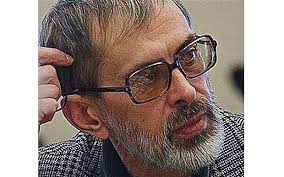
Arrested in December 1979 for publishing a samizdat magazine called Searches [Poiski], he has since put the knowledge he gained over six years’ imprisonment, when he suffered from tuberculosis, to good effect.
Amongst other things, his Centre for Prison Reform has published detailed research on torture in police custody in different regions of the Russian Federation and lobbied for greater public access and control over the prison service. Like any professional NGO, his Centre’s thinking has an effect on the government agenda. Since the death penalty was abolished in 1999, the Russian Presidential Administration has begun to discuss ways of increasing public control over the prison system.
*
In Ukraine, the historian and former prisoner Myroslav Marynovych (b. 1949) became the leader of the Amnesty International Association in its early years. It was then growing rapidly and lobbying the Ukrainian Government to sweep away its death penalty laws – something the Ukrainian Constitutional Court did on the last day of the 20th century.

Using foreign grants, Alexander Podrabinek (b. 1953) continues to produce the oldest human rights newspaper in the whole ex-Soviet area. The Express-Khronika [Express Chronicle] has appeared weekly since 1987, money permitting.
Formerly passed from hand-to-hand near the Kropotkin metro station, today it is on sale from a kiosk in the centre of Moscow in Pushkin Square. Podrabinek was the inspiration behind a group that monitored the practice of psychiatric abuse in the 1970s and 1980s and was imprisoned for the reports it produced.
♦
Once the USSR had collapsed, a few, very few, former prisoners came back to the country, the most famous – and most recent – probably being the writer Alexander Solzhenitsyn, [1918-2008, tr.]. He said he would return only on his own terms and has since metamorphosed into a silent Russian citizen.
*

One of the first to return to Moscow was Dr Kronid Lyubarsky, the astrophysicist who had the dual distinction in the 1970s of helping to launch the first Soviet probe to the planet Mars and, from inside a Mordovian labour camp, inventing Political Prisoners’ Day (30 October). This anniversary came to be observed by prisoners throughout the USSR for two decades.
When he finished his twelve-year year sentence at the end of the 1970s, Lyubarsky moved to Munich and began publishing a fortnightly USSR News Bulletin in Russian (Vesti iz SSSR) and English.
For the next ten years, it was one of the best sources of news on Soviet prisoners of conscience. Many AI members in Germany and other countries remember the help he gave them by phone or letter or at their Coordination Group meetings. My impression of him at that time was of a good but irritable man, who seemed to become needlessly exasperated with group members. He obviously relied on his wife to smooth over his words. When I met him again in Moscow in the 1990s, he was warm and witty, with no trace of his former irritability. I realized how difficult he may have found it to live abroad, and how hard, too, to speak with AI members who were strangers to the situation, no matter how committed and caring they were, about prisoners he knew well.
In Moscow in the 1990s he continued as a journalist, working as Deputy Editor on The New Times weekly, in those days a publication as influential in Russia as Der Spiegel today in Germany. He sued a parliamentarian who accused all Russian journalists of being in the pay of Chechnya. Unfortunately, Lyubarsky never heard the outcome of that case, because he drowned when he was on holiday in 1996.
*
Other ex-prisoners emigrated and carried on building their lives abroad. Since I started to write this piece, Natan Sharansky has resigned as Israel’s Interior Minister and led his Russian-Immigrant Party out of the governing coalition, over the terms of the peace deal with the Palestinians which the Prime Minister, Ehud Barak, has put forward.
When he lived in Moscow as Anatoly Shcharansky, he was given a 13-year prison sentence for his contacts with Western journalists. In his memoirs, he wrote that the security men in the jail would sometimes show him film of small groups of people (“housewives and students”, in their words) demonstrating for his release. The idea was to demoralize him with their small numbers. “The housewives and students” gave him heart, however, because he realized that people outside governments knew about him and cared for his human rights. Since then the students and housewives have been writing to him, too, protesting at Israeli Government policies towards Palestinians.
*

Of those who stayed in the former USSR, many prisoners in the 1990s drew a line under their previous experience and returned to their former lives. Tatyana Velikanova, an editor of A Chronicle of Current Events [1968-1982], the leading samizdat human rights journal, went back to teaching in school.
Dr Leonard Ternovsky, who assisted Alexander Podrabinek’s commission on psychiatric abuse, now works again as a radiologist in a Moscow hospital.
Not all prisoners of conscience were freed early in the Gorbachev era. A number had to endure their sentences in obscurity to the very last day, not lucky enough to benefit from official largesse. One was Julius Sasnauskas, a young Roman Catholic, who returned from his Siberian exile to become a priest and now has a parish of his own in Lithuania. Another was Yelena Sannikova. She typed the bulletins of the Moscow AI group in the 1970s, and visited prisoners in internal exile all over the country on behalf of the Solzhenitsyn Relief Fund. She completed her own exile in central Siberia only in 1988, the year in which AI was allowed to mount its first stall at the Moscow Book Fair.
♦
Without the active help of former prisoners, it would have been impossible for AI to set up its first office in Moscow in 1991. Some were grateful for what AI had done for them; more than that, they appreciated the symbolism of an AI office opening on Soviet territory and wanted it to succeed.
Nearly ten years on, it is hard to remember that there were then only two Foreign Exchange Points where you could change travellers’ cheques and they did not always open. The official exchange rate at that time was $1 to 1.60 roubles. Xeroxes were few and far between – and when you had crossed Moscow to the nearest one, you had to hand over your papers for copying and come to collect them afterwards. There were only two computer firms then working in Moscow, which controlled all access to email. As they did not do house-calls, your equipment had to be carried into the city and set up for a check-up in their office.
Most difficult of all, however, Soviet shops in 1990 were virtually empty, making the average Boy-Scout sale in a West European country look sumptuous. Soviet people got by because, as one said to me, they “hunted in packs” – and many also got vouchers for food or clothing from the places where they worked. None of these advantages were available to a foreigner living alone in Moscow.

For many months when I was setting up AI’s office, I lived with the pans and bedding provided by Yelena Sannikova’s mother. When, without a word of warning, the Exchange Points closed indefinitely it was former prisoners who dug deep in their pockets and gave me roubles to carry on with. When no plumbing equipment was to be had in Moscow for the new AI office, it was the headquarters of the ‘dissenting’ Evangelical Christians and Baptists who provided us with a toilet and piping free of charge. ‘Dissenting’ Baptists were the largest single group of Soviet prisoners on AI’s books in the 1970s and 1980s — gratitude can take the most unexpected forms.
Items of food disappeared from the shops one by one throughout 1991. When in September 1991 bread started to go, the lack of food became alarming. Out of gratitude for what she had done for them, former prisoners provided Yelena Sannikova with white bread, butter and honey, from different parts of the country. Part of this she sent home with me, when I was visiting. I have rarely been so grateful for something to eat.
*
President Gorbachov never declared a general amnesty at the end of the 1980s for prisoners of conscience.
A misfortune for the prisoners, this is also a shame for the new States that emerged from the USSR. An amnesty is not society’s way of forgiving particular prisoners, a Gorbachov advisor pointed out: it is society’s way of forgiving itself. This never happened in the USSR, and the new States have dragged a divisive inheritance with them. Since the Soviet Union collapsed, some former prisoners are still fighting for human rights to be respected that were denied by the old regime.

For 40 days in 1999, Victor Popkov fasted in central Moscow, as a symbolic way of purging Russian guilt for its treatment of Chechens. Young men with moral objections to fighting, still face imprisonment for refusing to do military service. Minority religions are experiencing their worst difficulties in years when they try to register their congregations and get official permission to practice. Mustapha Dzhemilev, a respected former prisoner, is still campaigning for Crimean Tatars deported by Stalin to come back to Ukraine and re-settle there with full civil rights.
♦
By and large, prisoners of the old regime remain unrecognized, and have not gravitated to positions where they wield great moral authority or political influence. What happened in the USSR in 1991 was not the Velvet Revolution of Czechoslovakia. Was there any use in what those Soviet prisoners had been through?
The human waste and unhappiness it caused was enormous. But the presence of so many who had been mercilessly punished for their beliefs, was also a sign there was a conscience in Soviet society, even if most people were frightened to live according to its dictates. Dr Simeon Gluzman told me he would have simply found it in bad taste to sign the notice committing Major-General Grigorenko to a psychiatric hospital. So he did not, though he was fully aware of the consequences. The encounter between Gluzman and Grigorenko was fateful for both their lives and – remarkably – they never met again, though there would have been opportunities to do so. The refusal to sign the commitment order was enough: his act was important for Gluzman and for Soviet medicine. (Grigorenko was committed to a psychiatric hospital by someone else.)
Writing in a different country in a different age, the poet Emily Dickinson said that all we know of love, is that love is all there is. I think we know even less about conscience, except that some people do not have one, and it’s usually an uncomfortable thing for those who do.
No one loves the nerve that agitates a tooth, but it is a signal that all is not well with the mouth. Perhaps that is the true measure of conscience. To continue in the words of Emily Dickinson: “It is enough – the freight should be proportioned to the groove”.
♦
The author of this survey, published in 2000, died at the age of 62. In a comparatively short life, Marjorie Farquharson did a remarkable amount to encourage and establish a respect for human rights in Russia (see Guardian, 1 July 2016).

From 1978 to 1991, she was a researcher on the Soviet Union at Amnesty International. Then, in 1991, she opened the first Amnesty office in Moscow. Marjorie taught fledgling NGOs how to fund their activities, and she travelled around the country introducing the idea of a human rights ombudsman to Russia’s disparate regions (see “Marjorie Farquharson“, Wikipedia).
 Marjorie
2 Comments
Comments are closed.